The Cost of Downtime: Why Modern Enterprises Need Automated Backup and Disaster Recovery
June 10, 2026
In a digital-first economy, data is the most valuable asset an organization owns. Yet, many businesses treat backup and disaster recovery (DR) as an afterthought—until an unexpected crisis hits.
Whether it is a sophisticated ransomware attack, hardware failure, a sudden power grid disruption, or simple human error, data loss isn’t a question of if, but when. When critical systems go dark, the consequences are immediate: stalled operations, immediate revenue loss, regulatory penalties, and a severe blow to customer trust.
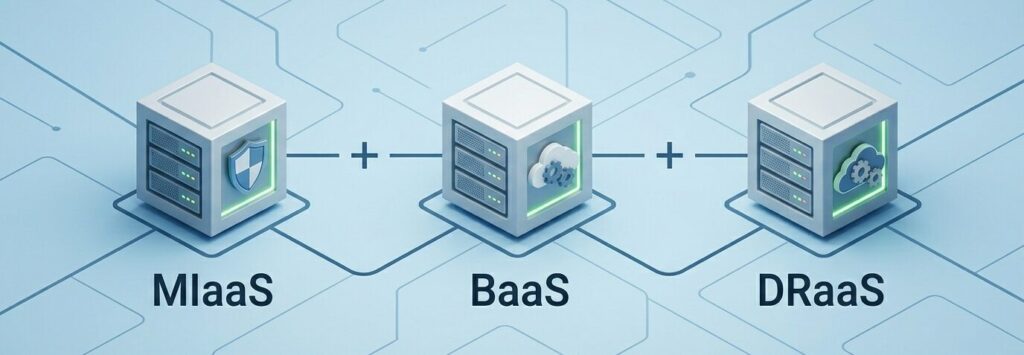
To survive in a hostile threat landscape, organizations must move away from legacy, manual backups. Modern business continuity requires an integrated, enterprise-grade strategy: combining Managed Infrastructure as a Service (MIaaS), Backup as a Service (BaaS), and Disaster Recovery as a Service (DRaaS).
The Core Pillars of Uninterrupted Operations
A resilient data strategy relies on two distinct but complementary functions: Backup (recovering lost data) and Disaster Recovery (restoring business operations).
1. Backup as a Service (BaaS): Total Data Retention
Traditional tape or localized hard drive backups are no longer sufficient. They are slow, prone to physical damage, and highly vulnerable to modern cyber threats that explicitly target local backup directories.
Baas completely automates data retention by securely duplicating your live data directly into a highly secure, localized cloud environment.
2. Disaster Recovery as a Service (DRaaS): Near-Zero Downtime
While backup ensures your data isn’t permanently lost, disaster recovery ensures your business can actually keep running during an infrastructure failure. If a primary data center goes offline completely, relying solely on data restoration can take hours—or even days.
DRaaS creates a real-time, standby replica of your entire IT environment.
Investing in automated backup and disaster recovery isn’t just about ticking an IT compliance box; it is a fundamental business enabler.
By pairing the industry-leading capabilities of BaaS and DRaaS with the secure, high-performance foundation of a local MIaaS cloud, your organization buys absolute capability. You secure the freedom to innovate, scale operations, and enter new markets with the confidence that your daily routine will remain uninterrupted—no matter what happens.