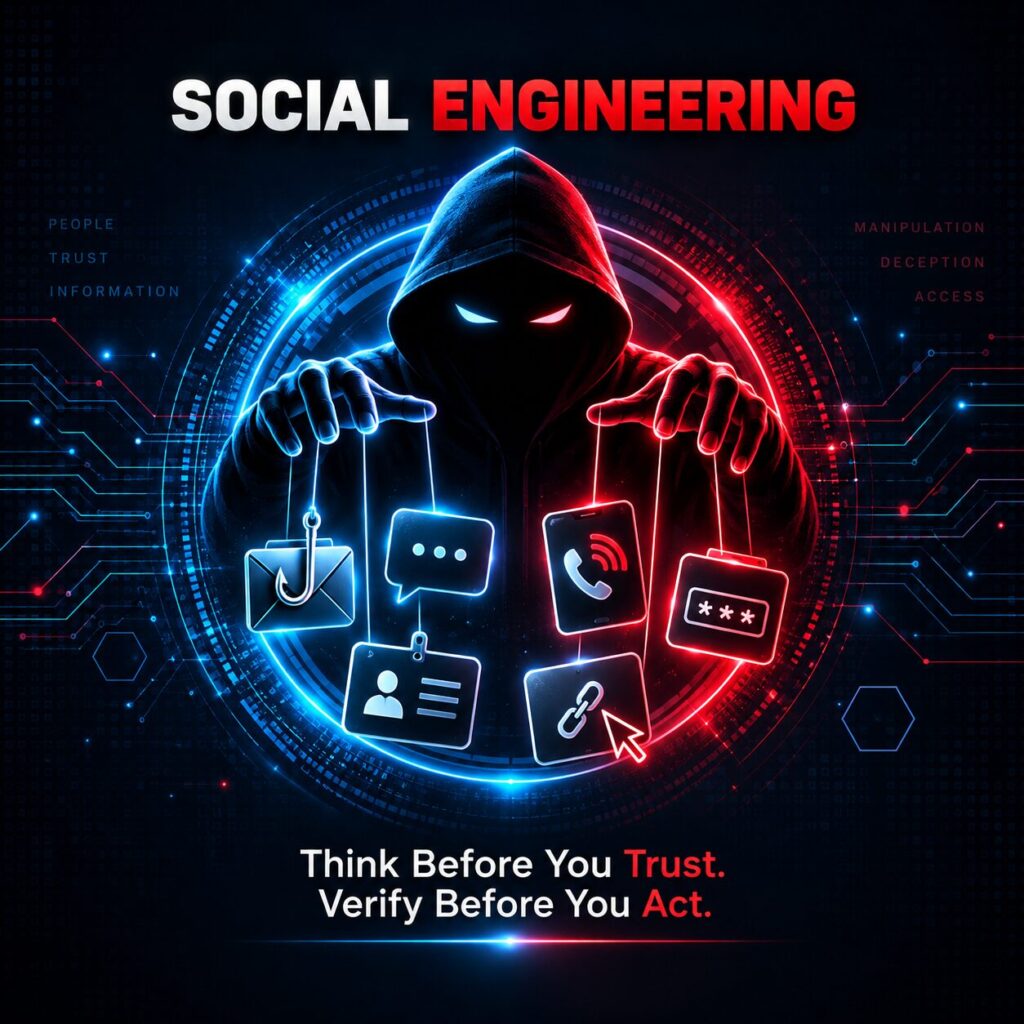
Social Engineering: Recognizing and Preventing Manipulation
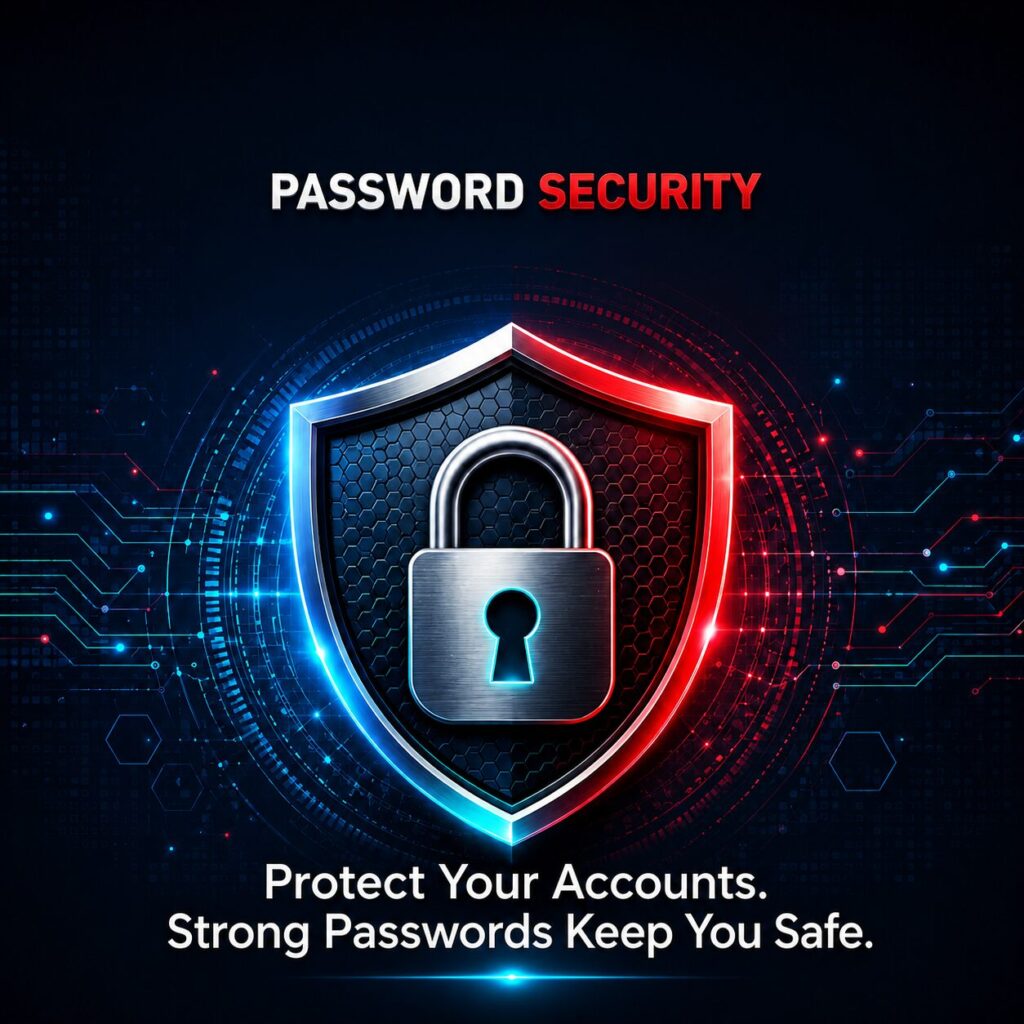
Passwords are the first line of defense against unauthorized access to personal and company accounts. Weak, reused, or improperly stored passwords can expose sensitive information and increase the risk of cyberattacks. Recognizing warning signs—such as unexpected verification codes, unfamiliar login alerts, and unauthorized password-reset emails—helps prevent further damage. Strong passwords should contain at least 12 characters and combine uppercase and lowercase letters, numbers, and symbols. Using unique passwords, enabling multi-factor
Password and SecurityProtect Your Accounts. Strong Passwords Keep You Safe.
Passwords are the first line of defense against unauthorized access to personal and company accounts. Weak, reused, or improperly stored passwords can expose sensitive information and increase the risk of cyberattacks. Recognizing warning signs—such as unexpected verification codes, unfamiliar login alerts, and unauthorized password-reset emails—helps prevent further damage. Strong passwords should contain at least 12 characters and combine uppercase and lowercase letters, numbers, and symbols. Using unique passwords, enabling multi-factor
EMAIL SECURITY Think Before You Click Emails Can Be Deceptive
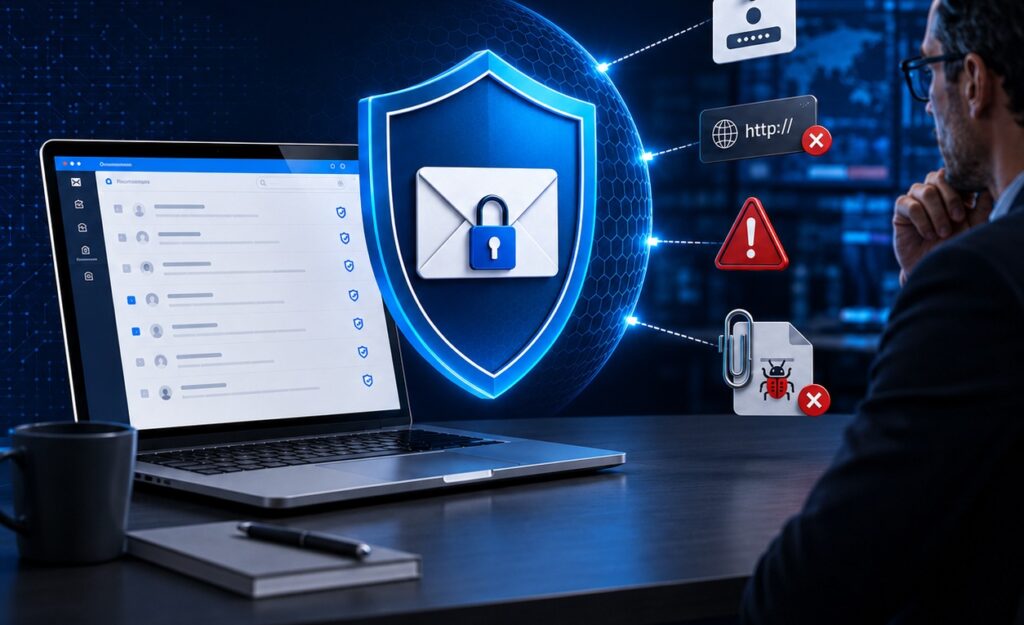
Protect your email by staying alert to phishing attempts, fake links, malicious attachments, and impersonation messages. Always verify the sender, especially when an email requests passwords, OTPs, sensitive information or urgent payments.
The Cost of Downtime: Why Modern Enterprises Need Automated Backup and Disaster Recovery
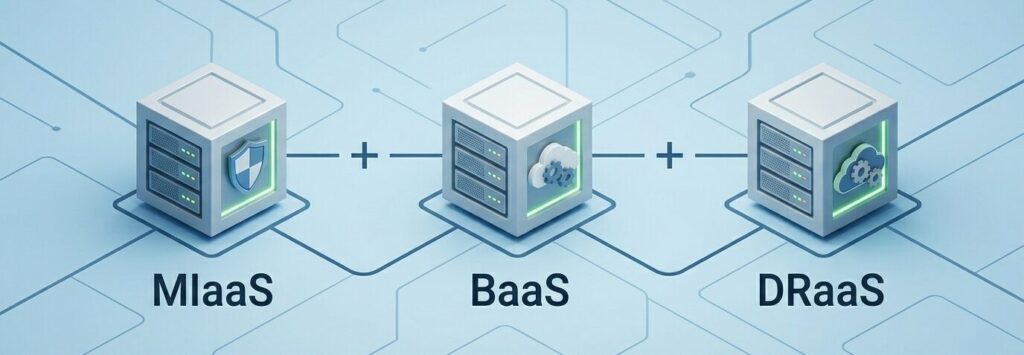
To survive in a hostile threat landscape, organizations must move away from legacy, manual backups. Modern business continuity requires an integrated, enterprise-grade strategy: combining Macrologic Infrastructure as a Service (MIaaS), Veeam Backup as a Service (BaaS), and Disaster Recovery as a Service (DRaaS)
Sovereign Cloud Power: Why Modern Industries Need Localized Infrastructure
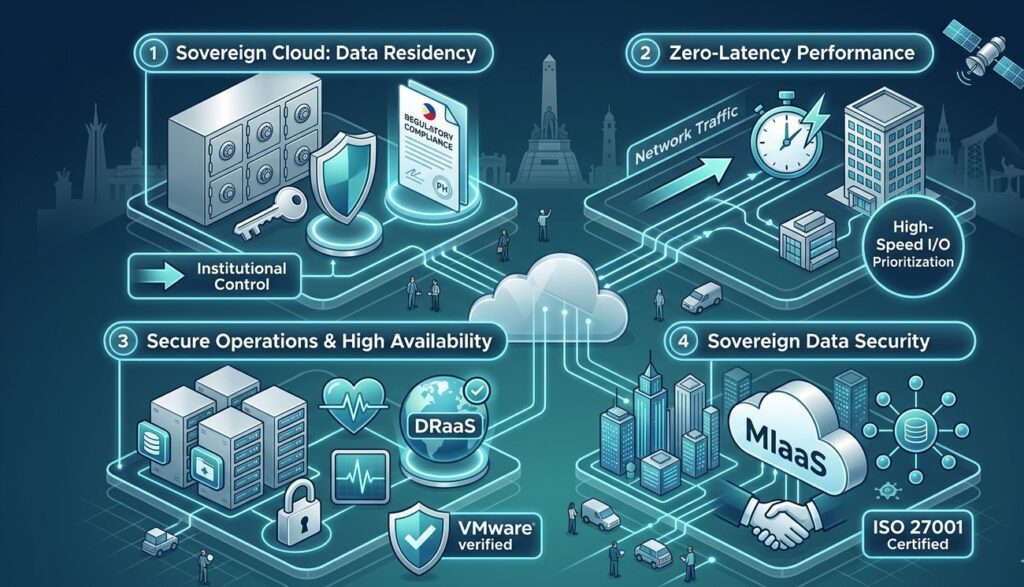
This shifting environment is exactly why businesses are migrating to specialized local clouds. MIaaS (Macrologic Infrastructure as a Service) pioneers this exact space in the Philippines, combining enterprise-grade technology with strict sovereign compliance
The Silent Growth Engine: What Cybersecurity Actually Does for Your Business
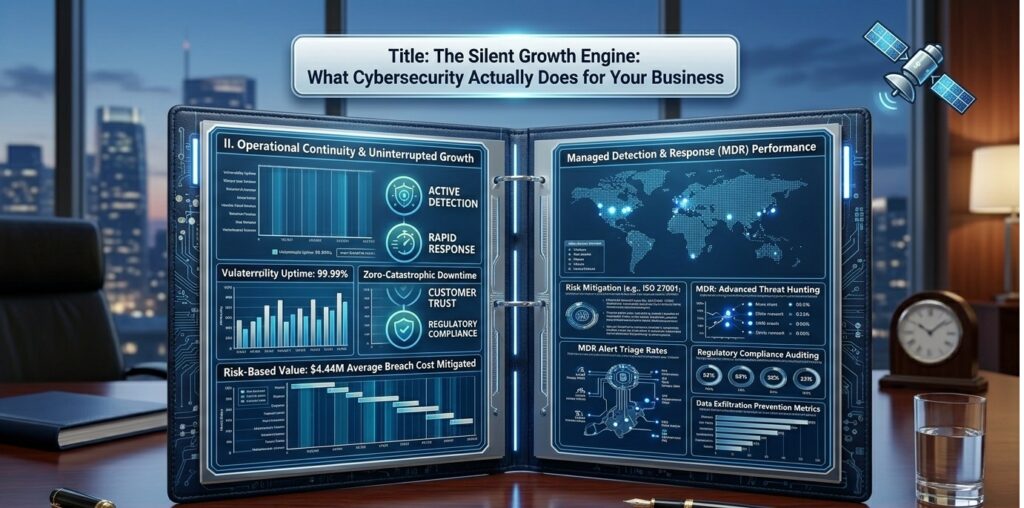
Cybersecurity suffers from a unique paradox: when it works perfectly, nothing happens. Like a seatbelt, its value is invisible until a crisis hits.
5 Common Cyber Threats for Businesses in the Philippines and How to Stop Them
The digital landscape in the Philippines has shifted. While 2025 saw a drop in “random” scams, 2026 is the year of targeted, high-stakes digital warfare.