

Social Engineering: Recognizing and Preventing Manipulation
September 1, 2026
Social Engineering: Recognizing and Preventing Manipulation
Social engineering is a cyberattack technique that manipulates people into revealing confidential information, providing access, or performing unsafe actions. Attackers often use urgency, fear, trust, or authority to convince victims to respond without verifying the request. Common warning signs include suspicious emails or messages, unexpected requests for passwords or verification codes, unfamiliar links, and individuals pretending to be trusted employees or organizations. To stay protected, always verify the identity of the requester, avoid sharing sensitive information, inspect links before clicking, and report suspicious activity to the IT Security Team. Staying alert and thinking before acting are important defenses against social engineering attacks.
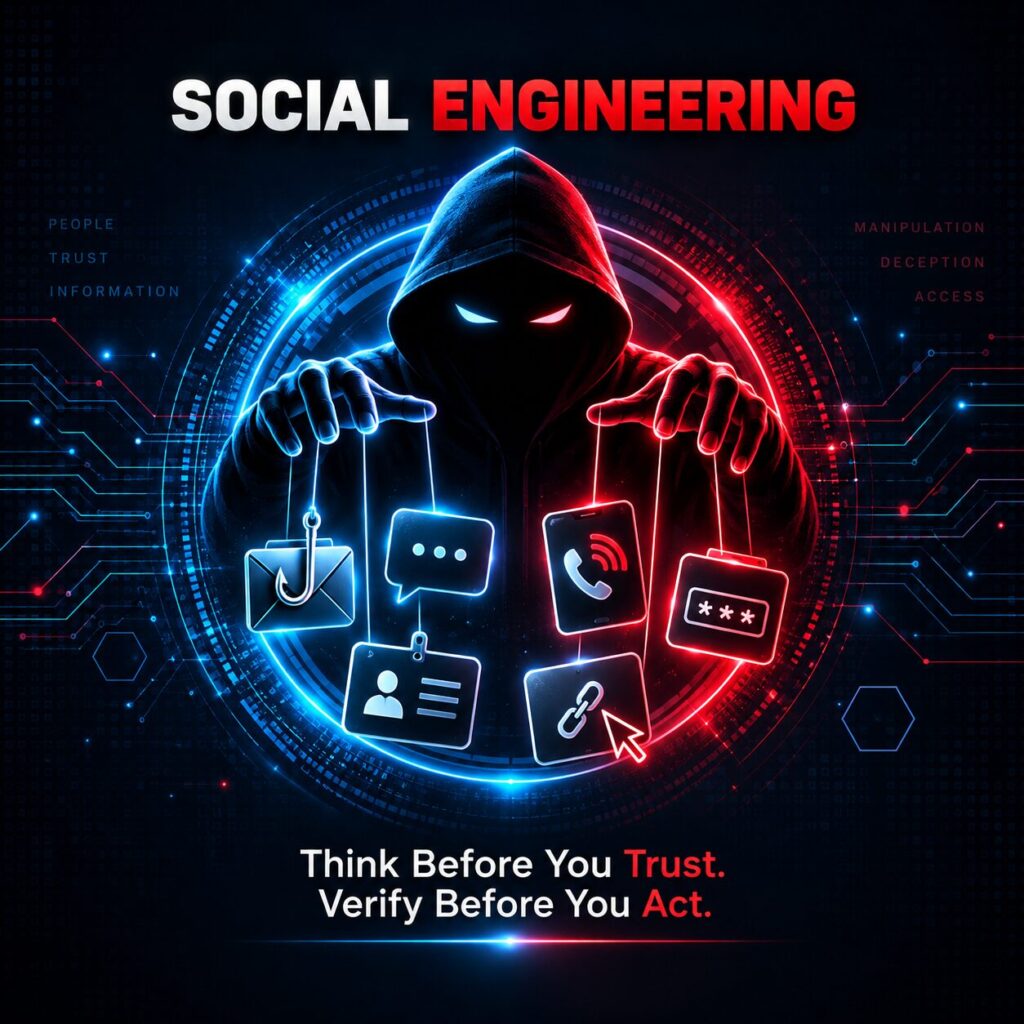
COMMON SOCIAL ENGINEERING ATTACKS
• Impersonation– Pretending to be IT, HR, or management
• Phishing – Fake emails asking for sensitive info
• Smishing/Vishing – Scams via SMS or phone calls
• Baiting – Offering something enticing (free USB/file)
• Tailgating – Gaining physical access without authorization
• Pretexting – Creating fake scenarios to gain trust
WARNING SIGNS
• Urgent or Unexpected Requests – Be cautious of messages that pressure you to act quickly or ask for something unusual without warning.
• Asking for Passwords, OTPs, or Sensitive Info – Never share confidential information without verifying the request first.
• Unexpected OTP Codes – Someone may be attempting to sign in using your credentials.
• Unknown Person Claiming Authority – Verify their identity before following instructions or sharing any information.
• Messages Creating Fear or Urgency – Be cautious of messages pressuring you to act immediately without thinking
• Requests Involving Money or Confidential Data – Always verify the request before sending payments or sharing sensitive information. • Suspicious Links or Attachments – Avoid opening unfamiliar links or files until you confirm they are safe.
HOW TO PROTECT YOURSELF
✔️ Verify identity before responding
✔️ Never share passwords or sensitive info
✔️ Question unusual or urgent requests
✔️Avoid clicking unknown links
✔️ Report suspicious behavior immediately
✔️ Follow company security policies
IF YOU ENCOUNTER AN ATTACK
• Do not respond or engage
• Report to IT Security Team
• Verify request via official channels
• Change password if information was shared
• Inform your team if needed
Social engineering remains one of the most dangerous cybersecurity threats because it targets people rather than systems. Attackers often rely on trust, fear, urgency, curiosity, and authority to manipulate individuals into revealing sensitive information, clicking harmful links, transferring money, or granting unauthorized access. Unlike technical attacks that depend on software vulnerabilities, social engineering succeeds by taking advantage of human behavior and decision-making. This is why awareness, careful judgment, and verification are essential in maintaining a safe and secure digital environment. Every employee, user, and member of the organization plays an important role in preventing these attacks. Security is not only the responsibility of the IT department; it is a shared responsibility that requires everyone to remain alert and cautious when receiving unexpected messages, requests, calls, or emails. A single moment of hesitation and verification can prevent a serious security incident, while one careless response may expose confidential information, financial records, company systems, or personal data. Recognizing warning signs such as urgent requests, suspicious links, unfamiliar contacts, requests for passwords or OTPs, and messages that create fear or pressure can greatly reduce the risk of becoming a victim. It is always safer to verify the identity of the requester, confirm unusual instructions through official channels, and report suspicious activity immediately. As social engineering techniques continue to become more convincing and sophisticated, our awareness and security habits must also continue to improve. Building a secure workplace begins with understanding that every message, request, and interaction should be handled with care. By staying vigilant, thinking before acting, and encouraging others to do the same, we strengthen our organization’s defense against manipulation, fraud, identity theft, and data breaches. Together, we can create a more secure, responsible, and trustworthy digital environment. Protecting ourselves from social engineering ultimately means protecting our information, our colleagues, our customers, our reputation, and the future of our organization.